Weld County, Colorado: A Real Cost of Living Breakdown for 2026
Weld County is not one single market. Here is how housing, utilities, taxes, and income actually break down for anyone planning a move into northern Colorado.
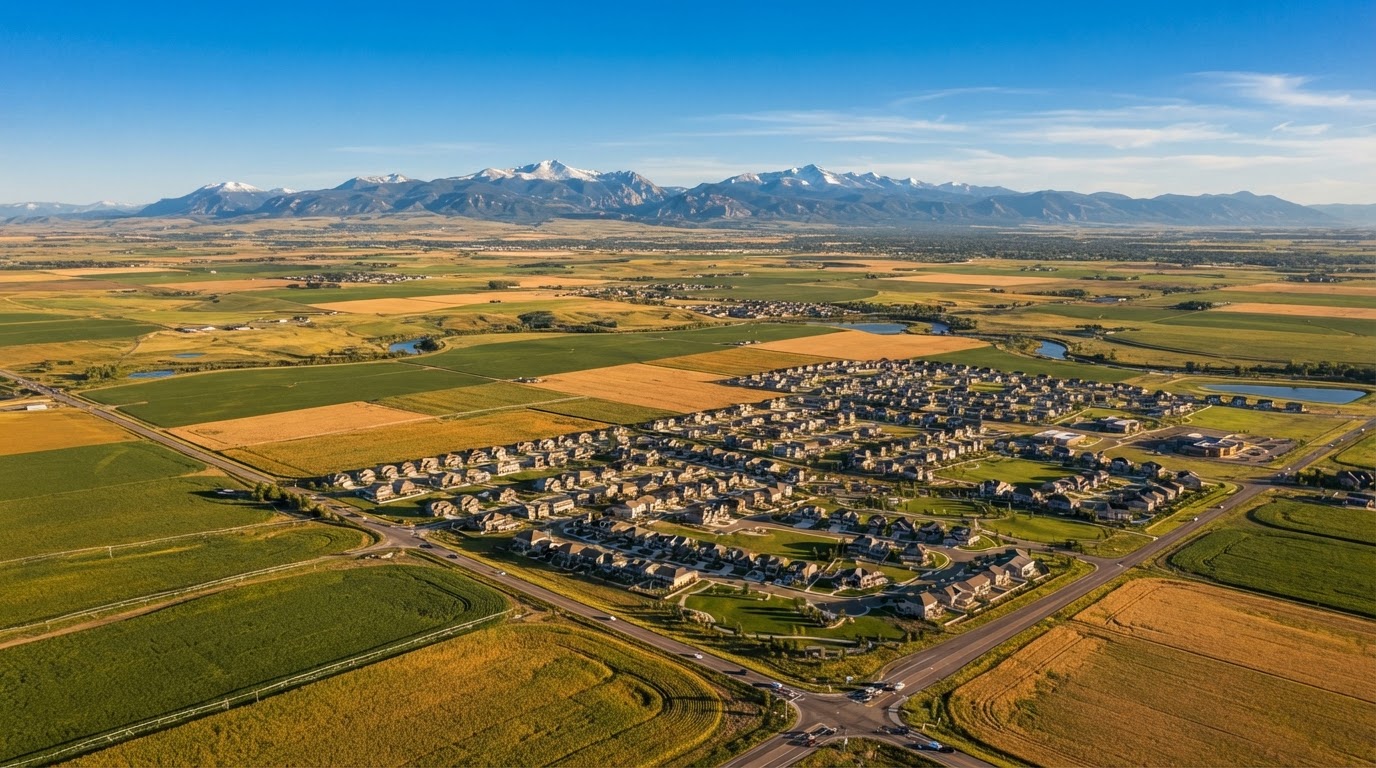
Weld County is not one single market. It stretches across 4,016 square miles of northern Colorado, from fast-growing communities on the edge of the Denver metro to agricultural towns farther out, and what you pay for daily life depends a great deal on where inside the county you land. What the county does share is a reputation it has built deliberately: a relatively young population, household income that runs above the state average, and a cost of living that has stayed noticeably friendlier than much of the Front Range. Here is how those numbers break down for anyone planning a move.
The Overall Cost of Living Index
Cost of living indexes use the national average as a baseline of 100. Weld County is reported at 113.4, which puts it 13.4 points above that national baseline. For comparison, Colorado as a whole runs about 6% above the national average, with housing about 11% higher than the national figure and utilities about 14% lower.
A separate 2026 estimate places the annual cost of running a one-adult household in Weld County at roughly $52,660. That figure is a bundle, not a single bill. It folds in housing, taxes, food, healthcare, childcare, and transportation, which is why two households with the same income can feel very differently about the same county.
| Indicator | Figure | Source |
|---|---|---|
| Cost of living index | 113.4, with the US at 100 | Weld County cost of living data |
| Annual cost, one-adult household | About $52,660 | 2026 county cost estimate |
| Median household income, 2020 to 2024 | $97,100 | US Census Bureau |
| Median monthly owner costs with a mortgage | $2,276 | US Census QuickFacts |
| Median monthly owner costs without a mortgage | $645 | US Census QuickFacts |
| Colorado utilities versus national average | About 14% lower | State cost of living data |
Housing Is the Line Item That Moves Everything
Housing carries the most weight in any cost of living calculation, and Weld County's housing numbers are the ones buyers watch closest. Census figures covering 2020 through 2024 show median selected monthly owner costs of $2,276 for households with a mortgage and $645 for households without one. That gap is not an accident. It reflects the difference between carrying a loan on a home you recently purchased and owning a property outright, and it is one of the clearest examples of how much timing and financing shape the same roof over your head.
What Monthly Owner Costs Actually Cover
The Census measure is built to capture the full monthly obligation rather than just the loan payment. It includes mortgage principal and interest, property taxes, insurance, and any condominium or association fees that apply. When you are comparing Weld County homes against listings in Boulder County or Denver Metro, looking at the all-in monthly figure is far more useful than comparing sticker prices alone. Two homes at similar prices can carry meaningfully different monthly costs depending on taxes, insurance, and association dues.
Why the Without-a-Mortgage Figure Still Matters
The $645 median for households without a mortgage is a useful floor for planning. It shows what property taxes, insurance, and basic carrying costs look like when the loan is out of the picture, which matters for buyers who plan to pay down a home over time, for retirees, and for anyone weighing a cash purchase. It also gives long-term owners a sense of how much of their monthly housing cost is tied to financing versus the ongoing cost of simply holding the property.
Utilities Run Below the National Average
Colorado utilities sit roughly 14% below the national average, and that is a genuine bright spot for Weld County households. The same statewide data shows housing running about 11% above the national average, so utilities are one of the few major categories pulling in the other direction. Actual bills still vary widely. Home size, age and efficiency of the heating and cooling systems, and how much outdoor water a property uses all change the picture from one address to the next. Before you commit to a home, ask the seller or listing agent for a recent utility history, and confirm current rates directly with the service providers for that address.
Groceries, Transportation, Healthcare, and Childcare
These categories rarely get the attention housing does, but together they can rival a mortgage payment, especially for families. The $52,660 annual estimate for a single adult in Weld County includes all of them, and the MIT Living Wage Calculator shows household figures climbing sharply as children enter the picture. The calculator publishes hourly living wage estimates for Weld County starting at $24.60 for the smallest household scenarios and rising to $76.52 for the largest, covering households with one or two working adults and up to three children.
Transportation deserves its own line of thinking in a county this large. Commute distance, vehicle count, and fuel use vary enormously depending on whether you work in Greeley, commute south toward the Denver metro, or work remotely. Childcare is the other wild card. Families with young children often find that childcare costs rival housing, which is why running your own numbers rather than relying on an average is so important.
Taxes and What Comes Out of a Paycheck
Taxes are folded into every cost of living estimate, and they are also the category where two neighbors can pay different amounts for identical lifestyles. Property taxes depend on your assessed value and the mill levies that apply to your specific location, which can differ by city, school district, and special district. Sales tax rates vary by municipality as well. Because rates and levies change and because your situation is specific to your address and income, confirm property tax details with the county assessor's office and talk through your full tax picture with a qualified tax professional before you finalize a budget.

Income Versus Expenses
The income side of the equation is where Weld County holds its own. Median household income in the county was $97,100 for 2020 through 2024, which is 1.7% higher than Colorado as a whole. The county's own annual financial report has described Weld as a relatively young county with high income and a lower cost of living, and the data supports that framing. Researchers also track a long-running series of mean real household wages for Weld County adjusted for the local cost of living, spanning 2009 through 2023.
Put the pieces together and the story is more balanced than an index of 113.4 suggests on its own. A household earning near the county median is working with income above the state figure while living somewhere that has historically undercut the metro on housing. The households that struggle most are typically those earning well below the median, single-income families with young children, and buyers who stretch to the top of their approval range and lose the buffer that makes an above-average index manageable.
Where Costs Run Lowest Inside the County
Weld County contains many distinct communities, and the differences between them are real. Niche publishes a 2026 ranking of the places with the lowest cost of living in Weld County, built on consumer price index data and access to affordable housing measured by housing-to-income ratios, using US Census and Bureau of Labor Statistics data. If you are flexible about which town you land in, that ranking is a reasonable place to start a shortlist, then verify current conditions locally, because a single fast-growing community can shift its own numbers within a couple of years.
What the Money Buys in Lifestyle Terms
Cost of living comparisons often miss the part buyers care about most: what the spending actually gets you. In Weld County, the trade is usually space and pace in exchange for distance. Households that move north from the denser parts of the metro frequently gain a larger home, more land, and shorter errands, while accepting a longer drive to work or to the cultural amenities they left behind. Whether that trade feels like a win depends entirely on your commute tolerance, your work location, and how often you actually need to be in Denver or Boulder. Amanda Miller and the Miller & Slate Group work in Weld County regularly and can help you match a specific town to your commute and budget rather than treating the county as a single market.

Getting Local Eyes on Your Numbers
Amanda Miller is a RE/MAX Elevate agent serving buyers, sellers, investors, and relocators across Denver Metro, Boulder County, Weld County, and Broomfield County through the Miller & Slate Group. Her track record includes more than 500 homes sold, more than 15 years of experience, over $200 million in volume, and 98% client satisfaction. Relocation clients get area orientation and support through remote transactions, which matters when you are trying to compare towns you have only seen on a screen. If you are early in the process, the free Colorado home buyer's guide is a good first step, and a conversation about your budget can turn county averages into a realistic monthly picture.
Frequently Asked Questions
Let's Find Your Next Beginning
Have questions about buying, selling, or investing in Colorado real estate? Schedule a free consultation with Amanda and get personalized guidance.